Let’s talk about No-Mow May
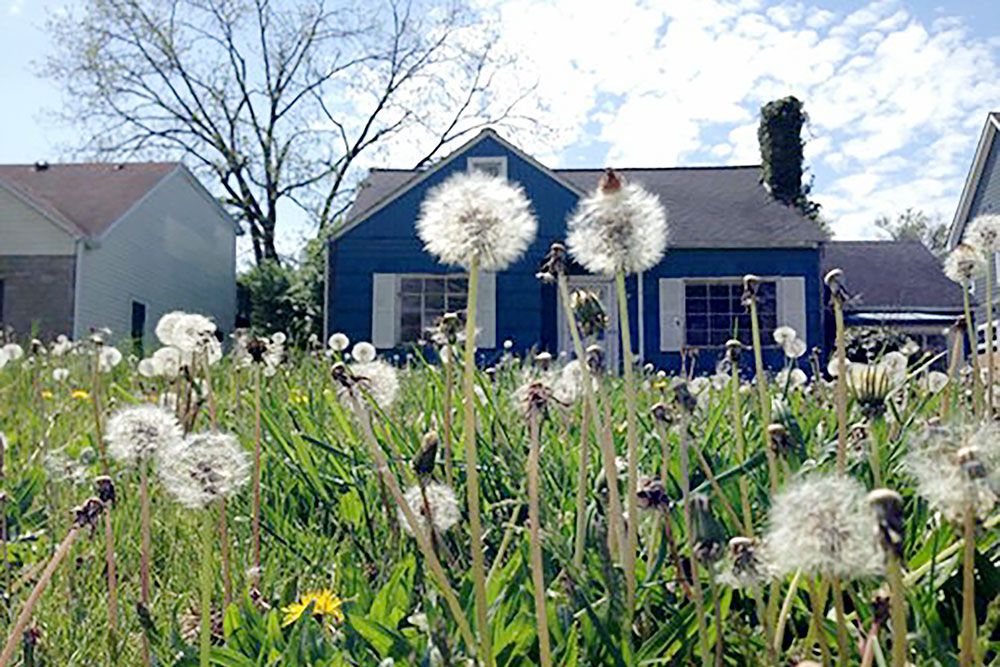
Bayfield volunteers Renee Sandelowsky and Helen Varekamp have been sharing monthly articles on the need to move away from invasive species of plants towards more native species. They have reached out to some outside experts for this month’s article. This May 2026 feature is adapted, by Cathy Kavassalis, from the article, Declining Bees and ‘Lazy’ Lawns, with kind permission from authors Lorraine Johnson, Heather Holm, and Sheila Colla.
Dandelions elicit extreme reactions. They’re considered the bane of lawn care. They are hated with a fervour and used to justify decades of chemical warfare with herbicides and fertilizers against the ‘scourge’ of yellow flowers. Anyone allowing a few dandelions to tarnish a perfect greensward risks community shaming.
Recently, a movement has tried to redeem the dandelion. Under the catchy slogan No-Mow May it encourages people to let lawns grow freely for one spring month to ‘feed the bees.’ The campaign began in the United Kingdom, where many of the plants that appear in unmown lawns are native and beneficial to local pollinators.
But North American lawns are different. They are mostly non-native turf grasses maintained with fertilizers and pesticides. Letting them grow for a few weeks doesn’t create meaningful habitat for native pollinators. It is a symbolic gesture, not ecological restoration. It is the equivalent of offering fast food for a month instead of a nourishing habitat year-round.
There is huge value in challenging the lawn aesthetic and in questioning the social pressure to keep landscapes neat, uniform, and green. However, we risk missing the point if we think a brief pause in mowing can reverse decades of habitat loss. What we need instead is long-term stewardship. This means actively replacing lawn with diverse native plantings that sustain pollinators throughout the growing season.
Dandelions themselves aren’t villains, but they aren’t saviours either. Their pollen is allelopathic, meaning that the pollen contains chemicals that can influence other plants. Because of this, dandelions can actually reduce reproductive success rates in native wildflowers. Studies also show that bumblebee queens, fed mainly on dandelion pollen, lack sufficient protein to reproduce successfully.
The real issue isn’t whether we tolerate dandelions; it’s whether we are creating genuine, co-evolved habitat that supports native species.
So, while No-Mow May may spark helpful conversation, it is not a solution. Not mowing because there is less lawn to mow is the real goal.
Here are better steps to take:
- Reduce lawn area and replace it with densely planted native flowers, shrubs, and grasses.
- Plant early-flowering native trees such as Willow, Red Maple, and native Cherries to feed spring pollinators.
- Support specialist bees by planting Goldenrods; Asters; Sunflowers; and Coneflowers.
- Leave dead stems and fallen leaves. They provide vital pollinator habitat.
- Spend the time you save not mowing to remove invasive plants and plan your next native planting project.
In short: A month of long lawn is not enough. A lasting change toward living, biodiverse landscapes is. Spread this message!
– Renee Sandelowsky and Helen Varekamp are Bayfield residents and local volunteers. They are writing a monthly series of articles, about the need to remove and switch away from invasive plants in favour of native species of plants, for the Canadian Coalition for Invasive Plant Regulation.